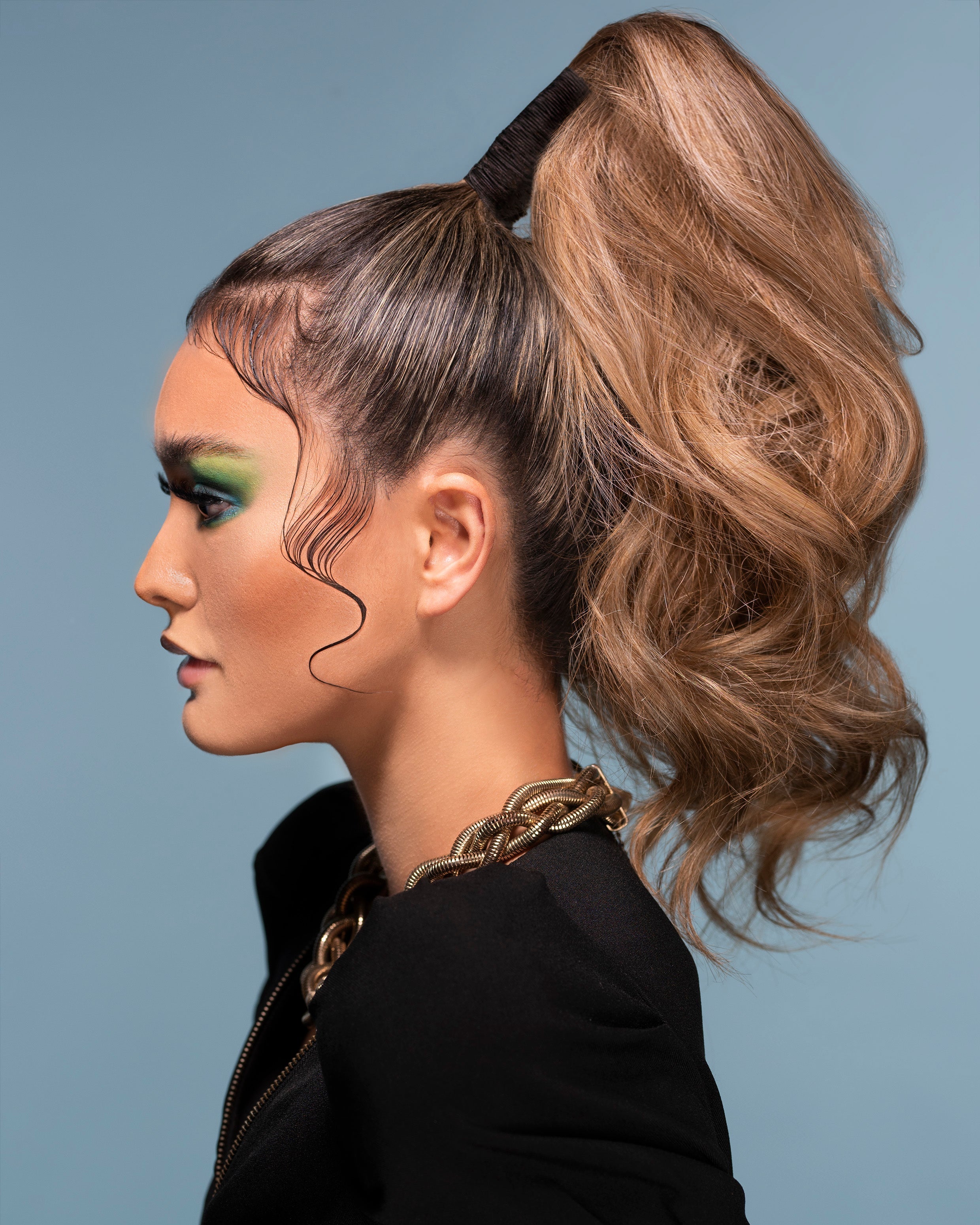
no limits /

PPD & PTD free semi-permanent colour range.

image credits / hair, photography & styling: Nichola Hand Make-up: Sarah Rachael

no oxidative pigments /

Ideal for clients who are pregnant, clients reintroducing colour after cancer treatment and clients who have allergies or sensitivities to oxidative pigments like PPD/PTD/TDS.

perfect colour refresher /

Use No Limits to revitalise hair in-between colouring, to enrich tone or to achieve a new natural shade for a short period of time.

12 pre-mixed shades /

Eight bright and four natural colours come pre-mixed in a conditioner base that leaves hair feeling soft and nourished.

lasts up to 30 washes /

Ready mixed and easy to apply with results that will last between 3 and 30 washes depending on hair texture and condition.

endless creativity /

The No Limits range can be intermixed to create bespoke shades and mixed with OCS treatment/mask to create soft pastels.

for salon and retail use /

These salon professional pre-mixed colours can be retailed to your customers. Sell the No Limits as they are, or add them to your OCS masks as a bespoke treatment colour.

step-by-step quick reference guide /

Consult, prepare, apply - it's as easy as that. Here, you'll find your basic how-to No Limits instructions. Scroll down for more in-depth information to help create flawless fashion and natural shades with the No Limits range.

  • A thorough consultation is the foundation of any successful colour service. During this stage, the client's desired result is discussed, and the necessary steps to achieve it are planned.

    A wet stretch test is performed to assess hair health, elasticity and porosity - helping determine how the hair will absorb and retain colour. Hair is then examined to determine if it provides and even surface for colouring.

  • To create the ideal canvas for colouring, hair must be clean and uncoated. Cleanse the hair with charcoal shampoo to remove impurities, product build-up and environmental pollutants. Follow with the prescribed shampoo (as determined in your wet stretch test).

  • Apply your no limits colour generously, cover with a compostable cap and thermal booster hat, and develop for 30 minutes. Once processes, rinse thoroughly until the water runs clear. Condition as usual.

  • Hair with varying porosity levels can absorb colour differently. Highly porous areas may appear brighter, and uneven porosity can result in patchy colour.

    When mixing a bespoke no limits shade, brush a small amount of your mixture onto white paper for a good indication of your result on very light blonde hair.

natural extracts /

  • Hydrolysed Wheat Protein

    Reduces electrostatic charges of the hair and leaves the hair easy to comb, supple, soft and shiny and / or imparts volume


  • Aloe Vera Leaf Juice

    Enhance the appearance of dry or damaged skin by reducing flaking and restoring suppleness.

  • Chamomile Flower Extract

    Gentle, soothing ingredient that helps calm the scalp and reduce irritation. Rich in flavonoids and antioxidants, it protects the hair and scalp from environmental damage.

fashion shades /

No Limits fashion shades are not formulated to a base level. The intensity of the tone/reflect you see will depend on the canvas you apply them to. The lighter your canvas, the brighter your results.

create perfect pastels with your fashion shades /

Whenever we lighten a colour (think painting) we add white. Likewise, to pastelise our No Limits fashion shades, we use our ‘white’ treatment - we recommend using OCS Power Build Intense Protein Treatment/Mask. By doing this we dilute the direct dye pigments to make them lighter, which results in a pastel tone. To achieve a true pastel shade we must first consider our canvas:

start light /

Achieving your perfect pastel relies heavily on your starting canvas being light - ideally a level 10 or lighter - and free from strong, visible tones.

There is more noticeable pigment inside the cortex below a level 10, which will disrupt your pastel formulation. With interfering pigment in the mix you will find it harder to achieve a true pastel shade.

achieving even pastel results /

If your canvas is uneven, your result will be uneven. Thorough wet stretch testing will help you identify any uneven porosity/texture that may impact your result.

There are a few ways to approach an uneven canvas:

- Pre-treat the hair according to your wet stretch test results.
- Pre-tone the hair before applying your final No Limits mixture. This can be done with oxidative colour mixed with a low volume peroxide. Pre-toning will help to even out the canvas inside the cortex and aid a more consistent colour from roots to ends.
- Colour to your canvas. For example, if you have a fresh set of blonde foils you can pastelise the canvas accordingly by applying two formulations:

  1. Add more treatment to your formula for the lighter, brighter, freshly lightened areas as these may process brighter.
  2. Add less treatment to your formula in areas that have been previously lightened and may have old toner present. These areas will likely need more pigment.

survival of the pastel /

When you add treatment to pastelise your No Limits colours, you’re effectively diluting the pigment and making it more subtle, which can effect longevity of tone.

To maintain the colour at home you can send your guest home with a customised No Limits colour. 

Scoop out the required amount of treatment from your 150ml pot to allow room for the No Limits to be added - you can add the excess treatment into your 500ml basin stock.

Retail services like these not only help your clients, but help to grow your profits as well. You can also add another surcharge and package up gloves, bowl, brush and a compostable bag so your client has everything they need to maintain their pastel shade at home.

going darker with no limits fashion shades /


To create darker, deeper fashion shades, you can add very small amounts of black (or dark brown for warmer tones) to your No Limits formulation.

Start by adding black to your formulations in pea-sized increments to ensure you don’t end up too dark.

For example, if you want a more gunmetal silver/grey result you can add a very small amount of black to your Lavender Blue mixture, until you achieve your desired colour.

If you want to achieve a denim blue or a dark teal, mixing black in small increments into your blue or green mix will give you the result you’re after.

To darken a warmer colour such as copper/red, you can use the dark brown or black to achieve a deeper reflect.


natural shades /

Each shade in the natural No Limits range is formulated with direct dye pigments to sit close to a base level but, because they are a direct pigment, they do not actually contain base. They do however, have a rough home-base level as shown below.

black = level 1

dark brown = level 3

chestnut brown = level 4

golden blonde = level 7

top tips for No Limits natural shades /


You will achieve the most true-to-tone result with the natural shades when your apply them to hair that is around the levels they sit at.

For example, applying golden blonde to natural level 7 hair (with no white) produces a dark blonde with natural golden reflects (see section below for more about No Limits Golden Blonde).

When darker No Limits natural shades are applied to lighter blonde or white hair, the reflect of the colour becomes more pronounced. The No Limits natural shades show their undertone more because they don’t have a base colour as such.

Remember No Limits is made with direct dye
pigments mixed to give us depth and
tone, rather than base.

To achieve a deeper, true-to-tone natural result on lighter hair, you may need to double colour with your chosen No Limits natural shade.

golden blonde in focus /


Golden blonde, which sits in a conditioning (white) base, is made up of brown, blue, violet, red and yellow direct dye pigments.

Thinking about mixing colour with paint, brown is achieved by mixing opposite colours on the colour wheel. For example, by mixing each of the counteractive tones together - blue and orange or red and green or violet and yellow - we achieve neutral colours or, in other words, different shades of brown.

If we apply No Limits Golden Blonde onto a natural level 7 (where it is formulated to sit) we will achieve a beautiful blend of honey and caramel tones.

But on white hair, where there is no natural hair colour pigment in the cortex, we will see a lot more of the warmer pigments used to make up golden blonde in your final colour result. In this instance you will achieve more of a level 8 golden copper blonde.

To achieve a more true-to-tone result on white hair we need to add in depth (a darker colour), and we need something a touch more counter-active. You could use, for example, the No Limits Dark Brown (just a touch) and the No Limits Lavender Blue (the silver and blue will help counteract the gold/orange).

No Limits FAQs /

Here, we've tried to answer your most frequently asked questions about the No Limits fashion. But please, if we've missed something, let us know and we'll get it added.

Any existing pigment in the hair below a level 9 will start to impact your No Limits results. Colour that sits inside the cortex can shadow the No Limits so, you need to consider it when formulating.

Over the years, we've had consistent feedback that some colour results aren't quite what the name suggested. The most common of these were the Red being quite pinky, the Orange being muted, the violet also being quite pinky and muted and the Silver Grey being very blue-based.

So, we've changed the names to better reflect the result:

RED (old) = RASPBERRY (new)

ORANGE (old) = CORAL (new)

VIOLET (old) = CRIMSON (new)

SILVER GREY (old) = LAVENDER BLUE (new)


Importantly, the formulations have not changed.

Existing tones in the hair, especially those that sit at or below a level 9, can impact your final result. You have a few ways to approach them. If, for example you have strong yellow tones in the hair you can:

1. Use them to enhance your results - great for coppers, apricots and golds. Simply create your No Limits mixture knowing there is already yellow 'in the bowl'.
2. Eliminate them by pre-toning the hair before applying your final No Limits mixture. This can be done with a No Limits mixture as well - either neat or mixed with OCS cream treatment/mask.

Remember, existing tones in the hair can shadow your No Limits colour and impact the result.

In this instance, before applying your Lavender Blue, it is likely you had existing yellow tones in the hair. Mix this with the blue tones in the Lavender Blue, and your green result starts making sense - yellow + blue = green.

100% yes! No Limits are amazing for toning at the basin - whether it's to enhance or neutralise a tone, you can use the No Limits colours neat or pastelise them by mixing with your favourite OCS cream treatment/mask.

No Limits Green, for example, can help you achieve super cool brunettes. Use it neat on levels 5 and darker.

If your canvas is even, your result will be even.

Your wet stretch test will help you identify any varying porosity/textural issues throughout the hair.

There are a few ways to approach an uneven canvas:

1. Pre-treat the hair according to your wet stretch test results.


2. Pre-tone the hair before applying your final No Limits mixture. This can be done with oxidative colour mixed with a low volume peroxide. Pre-toning will help to even out the canvas inside the cortex and aid a more consistent colour from roots to ends.

3. Colour to your canvas
. For example, if you have a fresh set of blonde foils you can colour your canvas accordingly by applying two formulations:

- Add treatment to your formula for the lighter, brighter, freshly lightened areas as these may process brighter.

- Add less or no treatment to your formula in areas that have been previously lightened and may have old toner present. These areas will likely need more pigment.

It's super easy to create pastel shades. Start with a good amount of OCS cream treatment/mask (we recommend using the Power Build Intense Protein) and add your No Limits colour in small quantities until your desired shade comes to life.

Remember, any existing tones in the hair will impact your pastel shade so, the lighter your canvas, the better.

You can also test your shade on a piece of white paper before application.

When you add treatment to pastelise your No Limits colours, you’re effectively diluting the pigment and making it more subtle, which can effect longevity of tone.

To maintain the colour at home you can send your guest home with a customised No Limits colour. 

Scoop out the required amount of treatment from your 150ml pot to allow room for the No Limits to be added - you can add the excess treatment into your 500ml basin stock.

Retail services like these not only help your clients, but help to grow your profits as well. You can also add another surcharge and package up gloves, bowl, brush and a compostable bag so your client has everything they need to maintain their pastel shade at home.

Yes they can. You can create bespoke treatment toners for your clients by mixing No Limits into their OCS Mask tub or you can sell them their No Limits as it is if they're wanting to maintain a brighter hue - don't forget to send them home with a pump.

You could also create a cute No Limits tools kit - include a brush, a bowl and a pair of gloves - as an add on retail bundle.

don't be shy, show us your results /

We love, love, love seeing how you bring OCS products to life. Sometimes, with your permission of course, we'll feature your work across our platforms to help inspire other talented stylists around the world. So, don't be shy....tag us @organiccoloursystemsofficial in your posts or email your work to us - hello@herbuk.com. Don't forget to share your formulation; we love the nitty gritty detail.